“Jesus is God”
The Council of Nicaea (AD 325) was one of the most pivotal events in early Christian history, shaping the core of Christian doctrine and establishing theological unity at a critical moment. Convened by Emperor Constantine, the council aimed to resolve the growing controversy over Arianism—a teaching advanced by the Alexandrian priest Arius, who argued that the Son of God was a created being, not co-eternal or fully divine like the Father. This dispute threatened both the unity of the Church and the cohesion of the empire, prompting the first ecumenical council in Christian history.
At Nicaea, bishops from across the Roman world gathered to address the question: Who is Jesus in relation to God the Father? After intense debate, the council rejected Arius’s claim that “there was a time when the Son was not.” Instead, it affirmed that the Son is “begotten, not made, of the same substance – consubstantial - (homoousios) with the Father.” This term, homoousios (Greek), became the cornerstone of Nicene orthodoxy. It asserted that the Son shares the identical divine nature with the Father, ensuring that Christian worship of Jesus as Lord was not idolatrous but fully consistent with monotheism.
The resulting Nicene Creed provided a clear, authoritative statement of Christ’s divinity. It declared the Son to be: “God from God”, “light from light”, “true God from true God.”
At Nicaea, bishops from across the Roman world gathered to address the question: Who is Jesus in relation to God the Father? After intense debate, the council rejected Arius’s claim that “there was a time when the Son was not.” Instead, it affirmed that the Son is “begotten, not made, of the same substance – consubstantial - (homoousios) with the Father.” This term, homoousios (Greek), became the cornerstone of Nicene orthodoxy. It asserted that the Son shares the identical divine nature with the Father, ensuring that Christian worship of Jesus as Lord was not idolatrous but fully consistent with monotheism.
The resulting Nicene Creed provided a clear, authoritative statement of Christ’s divinity. It declared the Son to be: “God from God”, “light from light”, “true God from true God.”
Countering every point of Arian teaching. The council also condemned Arius and ordered his writings destroyed, marking a decisive rejection of teachings that undermined the full divinity of Christ.
Further, it stated that Jesus was “begotten not made.” The words “begotten” and “made” both mean coming from another. However, there is a real difference as Saint Athanasius explains. “Begotten” means it entirely participates from that which it comes – perfect participation. “Made” implies a participation to some degree but not entirely. For example, we are all made in the image of God; we share in godliness to some degree. If we perfectly participate, we will be the same as God! Since Jesus perfectly (entirely) shares in the Father’s divinity, Jesus is God.
In addition, “begotten” implies automatic participation, a metaphysical necessity. “Made” indicates an act of will. For instance, creation is an act of God’s will; it does not automatically flow from God as an ontological
necessity.
What the Council of Nicaea teaches is so relevant in our times. It clearly affirmed the truth that Jesus is God. Jesus is not just a demigod, not a superhero (like Superman, Spiderman, Batman, and the like), not just a prophet or a man with super-consciousness (miracle worker, preacher, ethical teachers like Buddha, Muhammad, Confucius, Rama, Krishna, etc). It made Christianity distinct from Judaism and all other religions in the world.
Further, it stated that Jesus was “begotten not made.” The words “begotten” and “made” both mean coming from another. However, there is a real difference as Saint Athanasius explains. “Begotten” means it entirely participates from that which it comes – perfect participation. “Made” implies a participation to some degree but not entirely. For example, we are all made in the image of God; we share in godliness to some degree. If we perfectly participate, we will be the same as God! Since Jesus perfectly (entirely) shares in the Father’s divinity, Jesus is God.
In addition, “begotten” implies automatic participation, a metaphysical necessity. “Made” indicates an act of will. For instance, creation is an act of God’s will; it does not automatically flow from God as an ontological
necessity.
What the Council of Nicaea teaches is so relevant in our times. It clearly affirmed the truth that Jesus is God. Jesus is not just a demigod, not a superhero (like Superman, Spiderman, Batman, and the like), not just a prophet or a man with super-consciousness (miracle worker, preacher, ethical teachers like Buddha, Muhammad, Confucius, Rama, Krishna, etc). It made Christianity distinct from Judaism and all other religions in the world.
Beyond doctrinal clarity, Nicaea set a precedent for ecumenical councils as instruments of unity and theological definition. Its defense of Christ’s divinity safeguarded the central Christian understanding that salvation is possible because God Himself entered human history in the person of Jesus Christ.
I will be on vacation from Friday, December 26, through Thursday, January 8. During this time, I’ll also be traveling to India to officiate a wedding. I’d appreciate your prayers that everything goes smoothly.
-- Father Augustine Joseph
Pastor

- Friday, December 12:
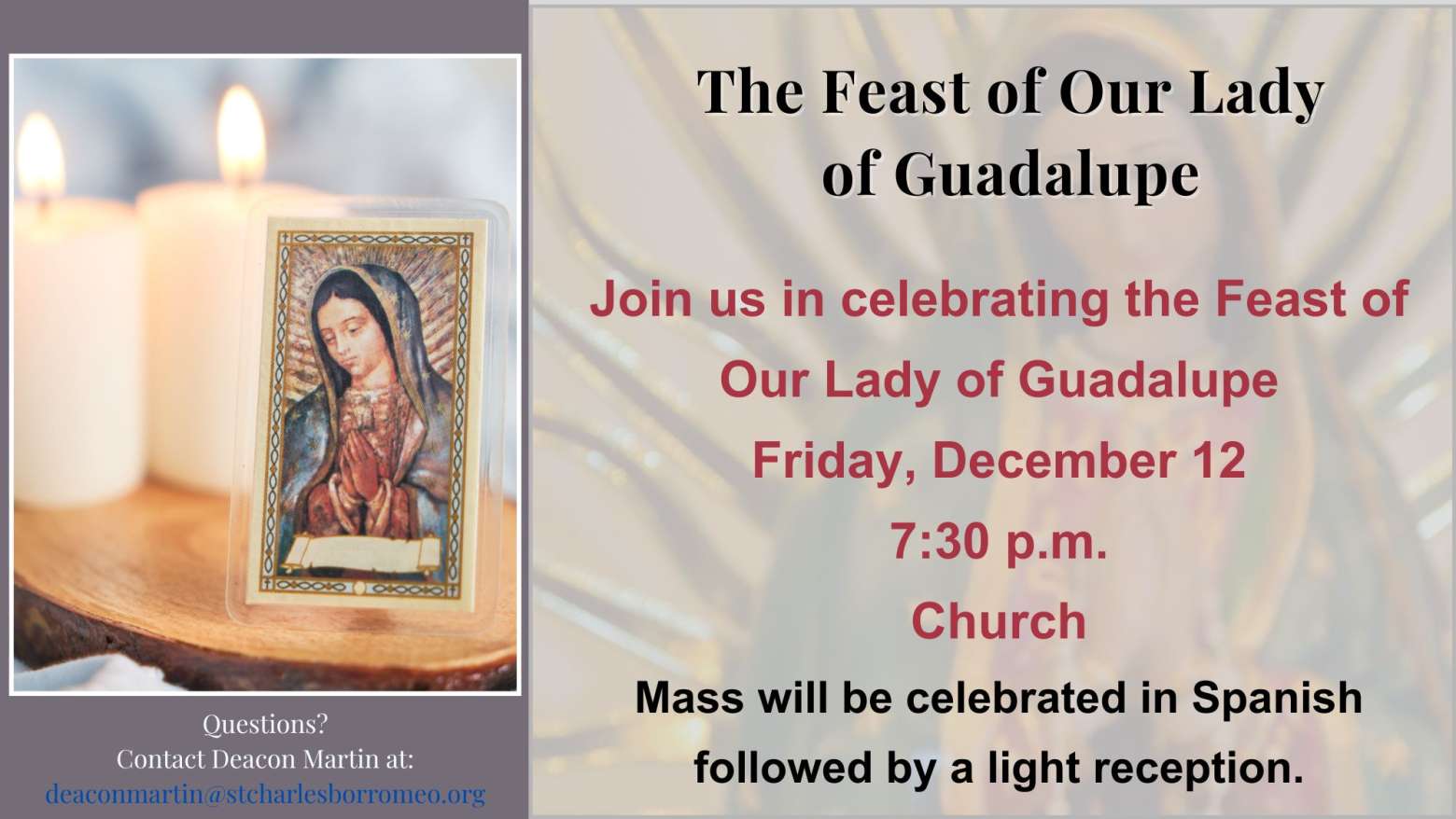
Feast of Our Lady of Guadalupe
- Mass 8:30 a.m. (Church/Livestream)
- Giving Tree - Verify Gifts 9:45 a.m. (Hall)
- Candle Dancers Rehearsal 5:00 p.m. (Church)
- VBS True North Christmas Pageant 6:00 p.m. (Pope)
- Feast of Our Lady of Guadalupe Mass (in Spanish) 7:30 p.m. Reception Immediately to Follow in the Pope Room - Saturday, December 13:
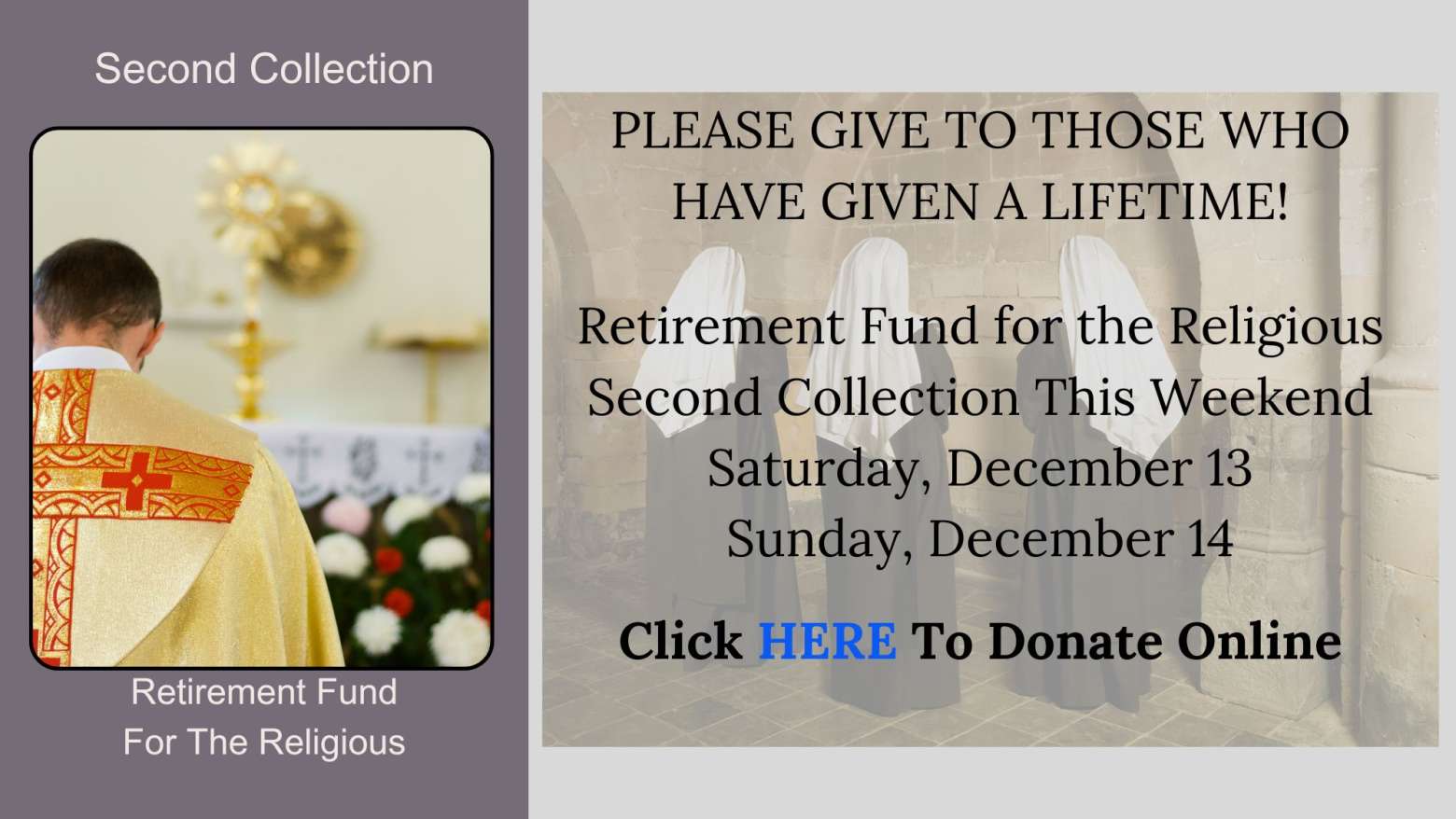
Second Collection: Religious Retirement Fund
- Giving Tree - Gifts in the Hall
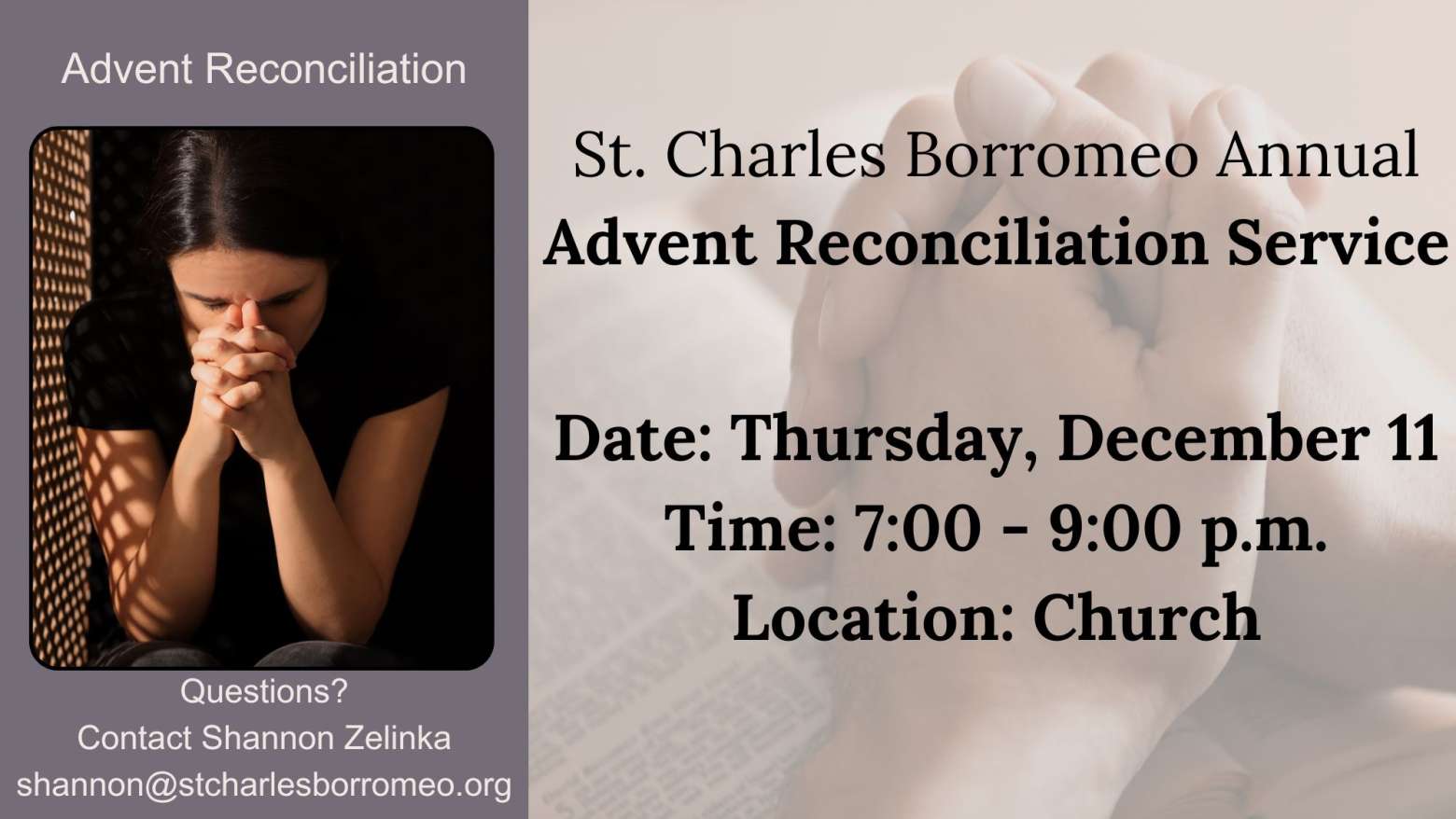
- Reconciliation 4:00pm - 4:30 p.m.
- Anchor & Vine Ministry 4:30 p.m. (Pope/Benedict)
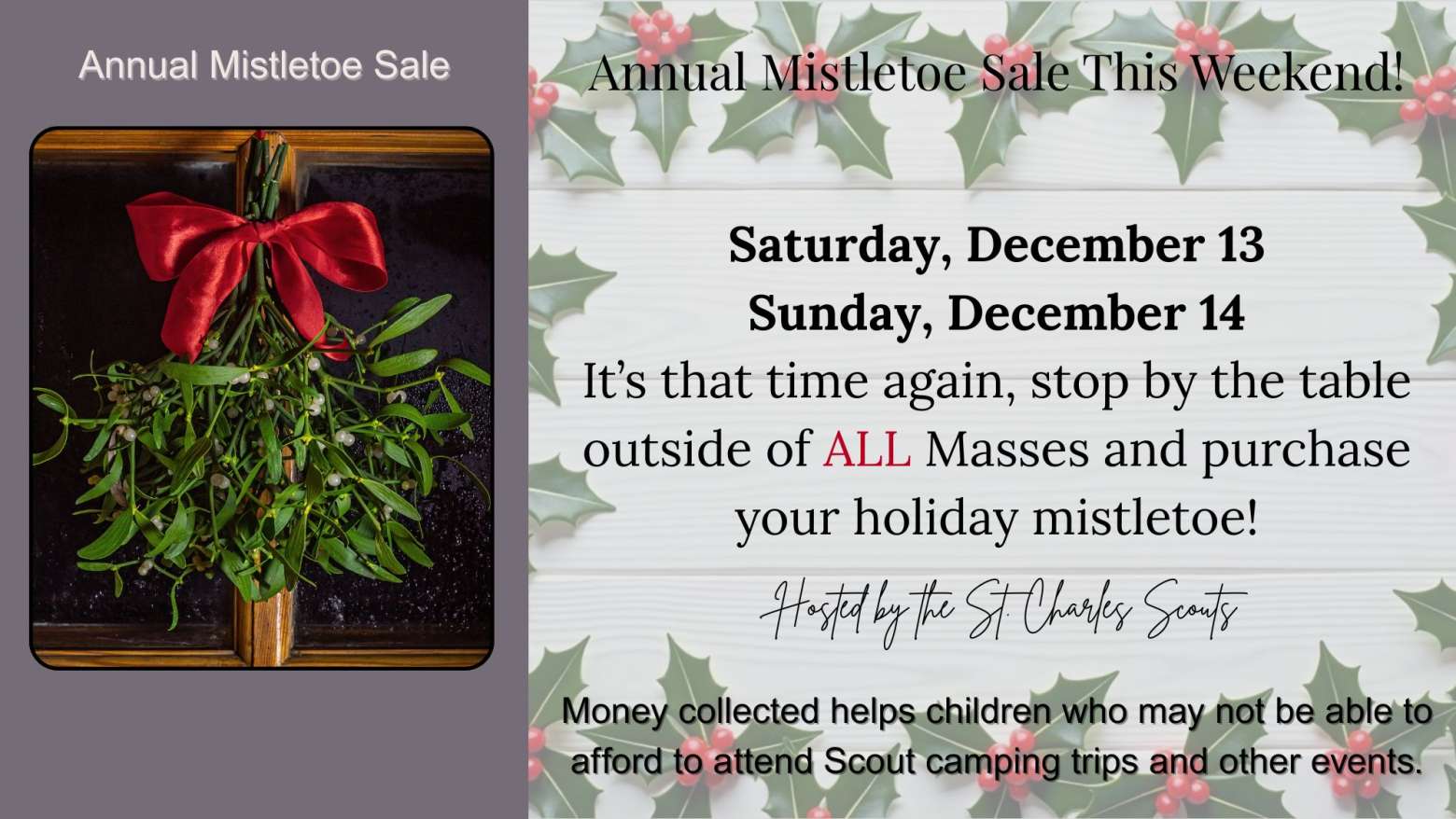
- Scouts Selling Mistletoe 4:45 p.m. (Plaza)
- Name Tag Weekend 5:00 p.m. (Church)
- Vigil Mass 5:00pm @ Church - Sunday, December 14:
Third Sunday in Advent
Second Collection: Religious Retirement Fund
Family Fellowship Sunday/Coffee and Donuts
- Name Tag Sunday for ALL Masses
- Mass 7:30 a.m. (Church)
- Scouts Selling Mistletoe 8:30 a.m. to 12:45 p.m. (Plaza)
- Mass with CLW 9:30 a.m. (Church/Livestream)
- Tiny Treasures 9:30 a.m. (Dominic)
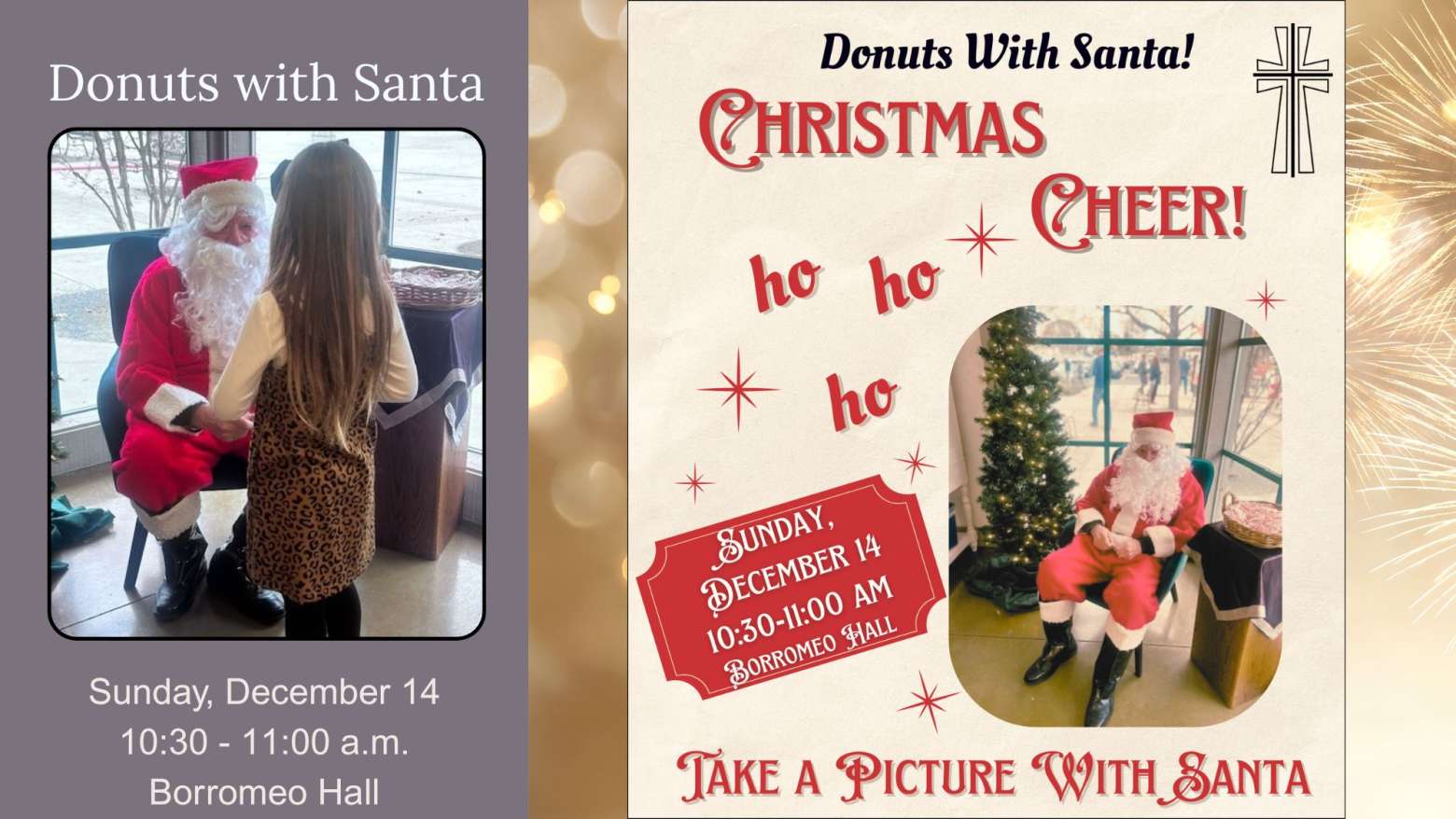
- Donuts with Santa 10:30 to 11:00 a.m. (Hall)
- Youth Confirmation - Year #1 1:30 p.m. (Pope) - Monday, December 15:
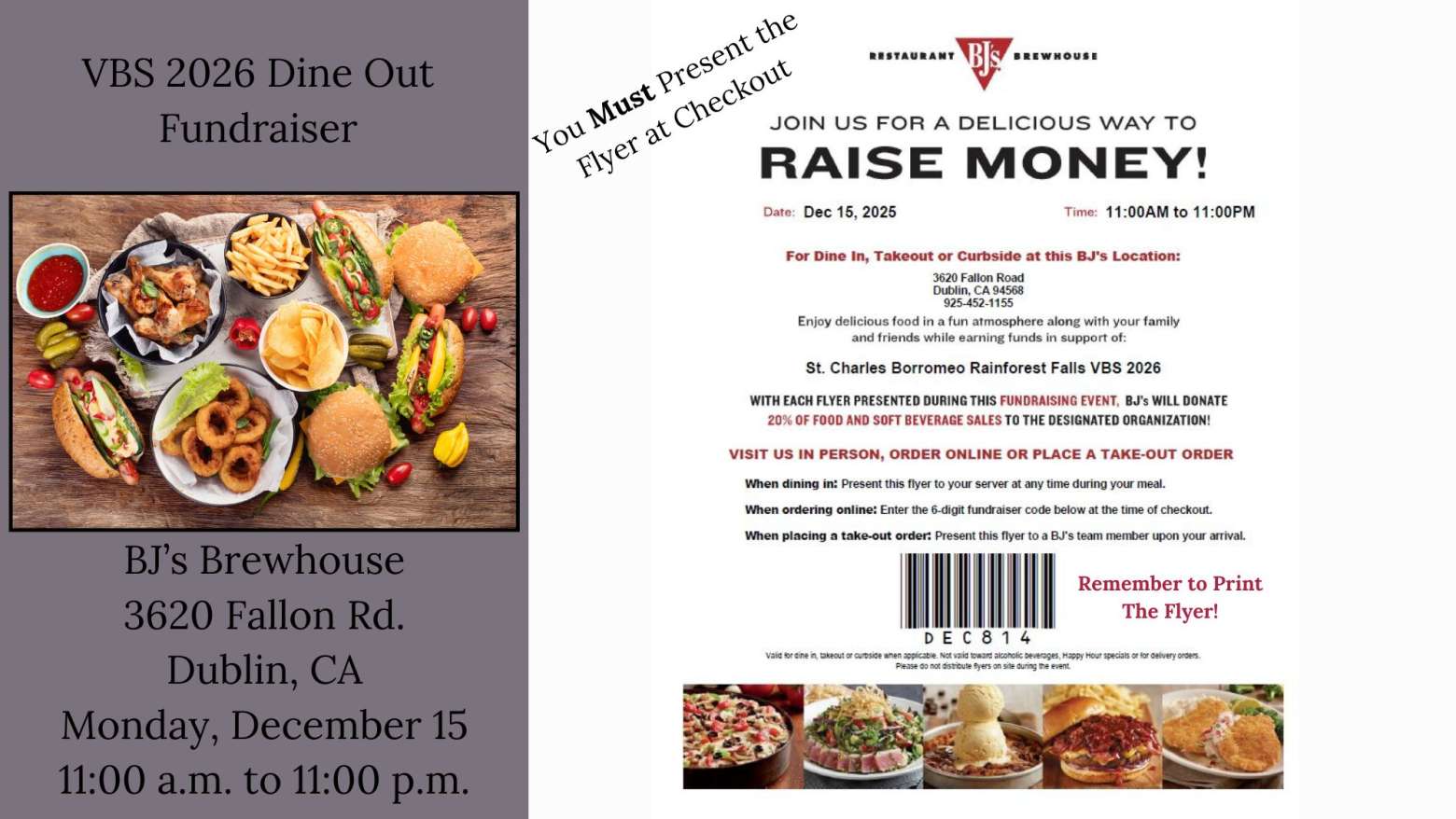
VBS 2026 Dine Out Fundraiser: BJ's Brewhouse (Dublin) 11:00 a.m. to 11:00 p.m.
- Mass 8:30 a.m. (Church/Livestream)
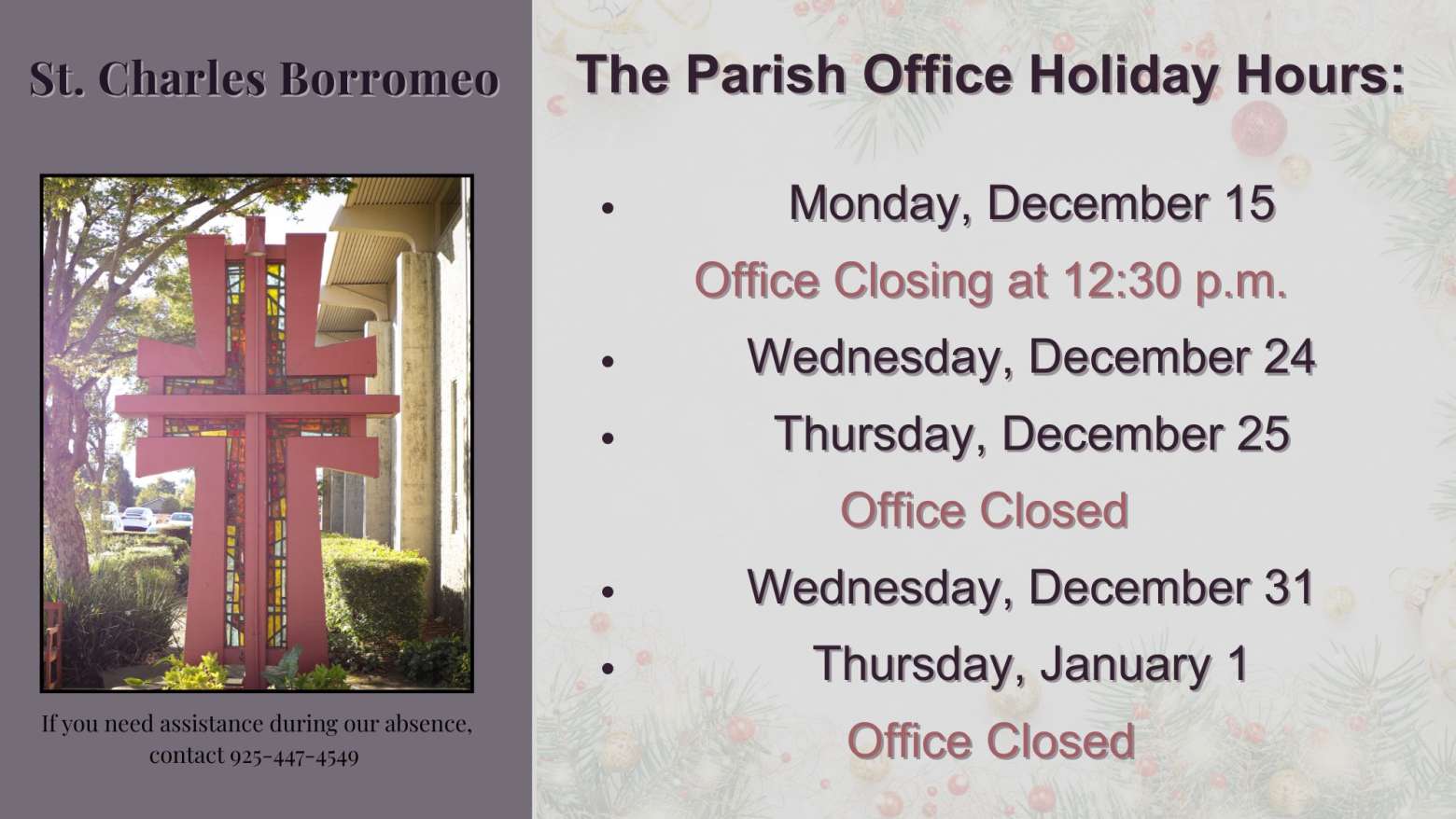
- Parish Office Closed at 12:30 p.m.
- Staff Christmas Party 1:00 p.m.
- Liturgy Scheduling Meeting 3:00 p.m. (Pope)
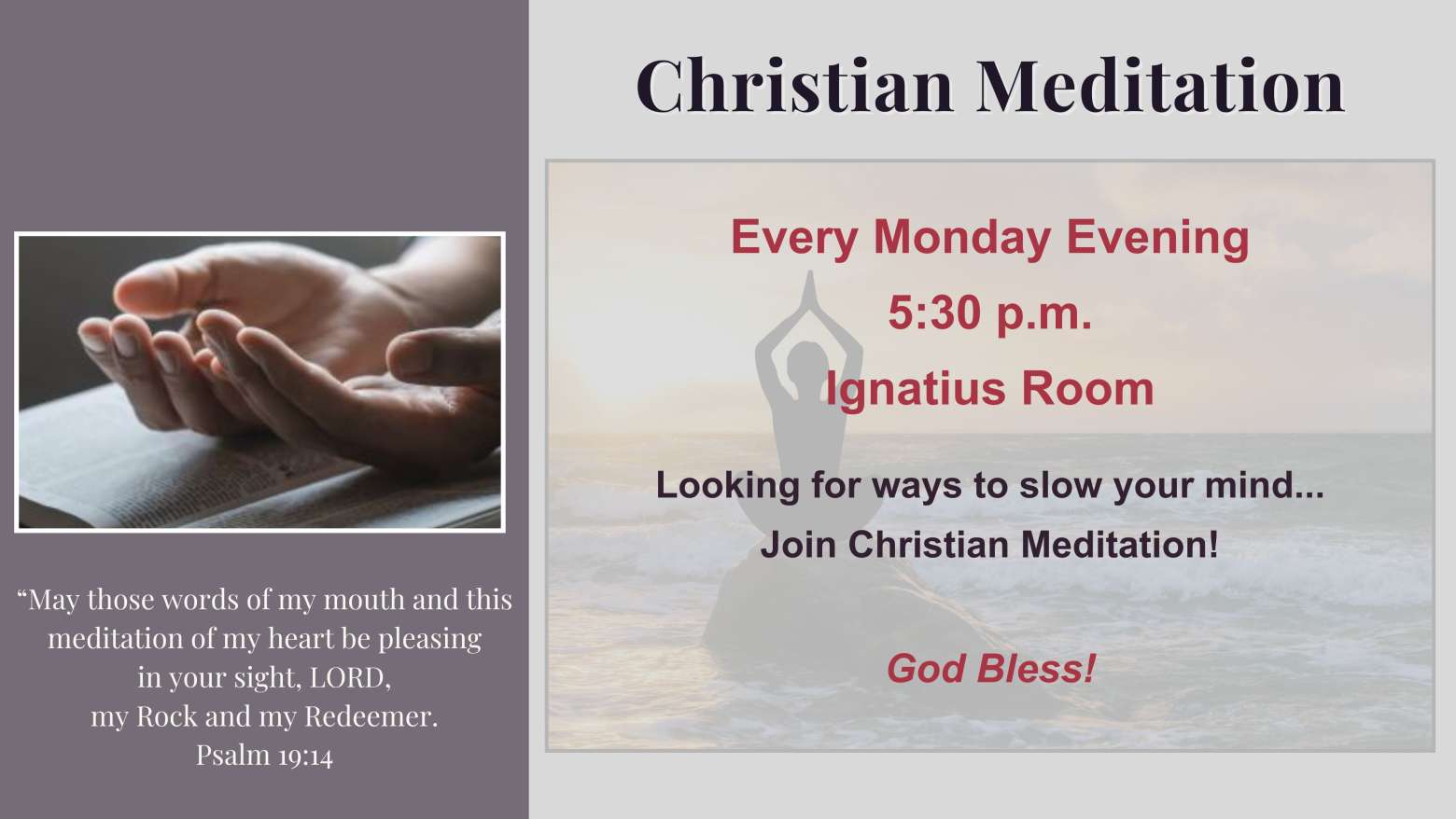
- Christian Meditation 5:30 p.m. (Ignatius)
- High School Youth Ministry 7:00 p.m. (Ignatius) - Tuesday, December 16:
- Mass 8:30 a.m. (Chapel/Livestream)
- Liturgy Scheduling Meeting 10:00 a.m. (Pope)
- Finance Council Meeting 12:00 p.m. (Pope)
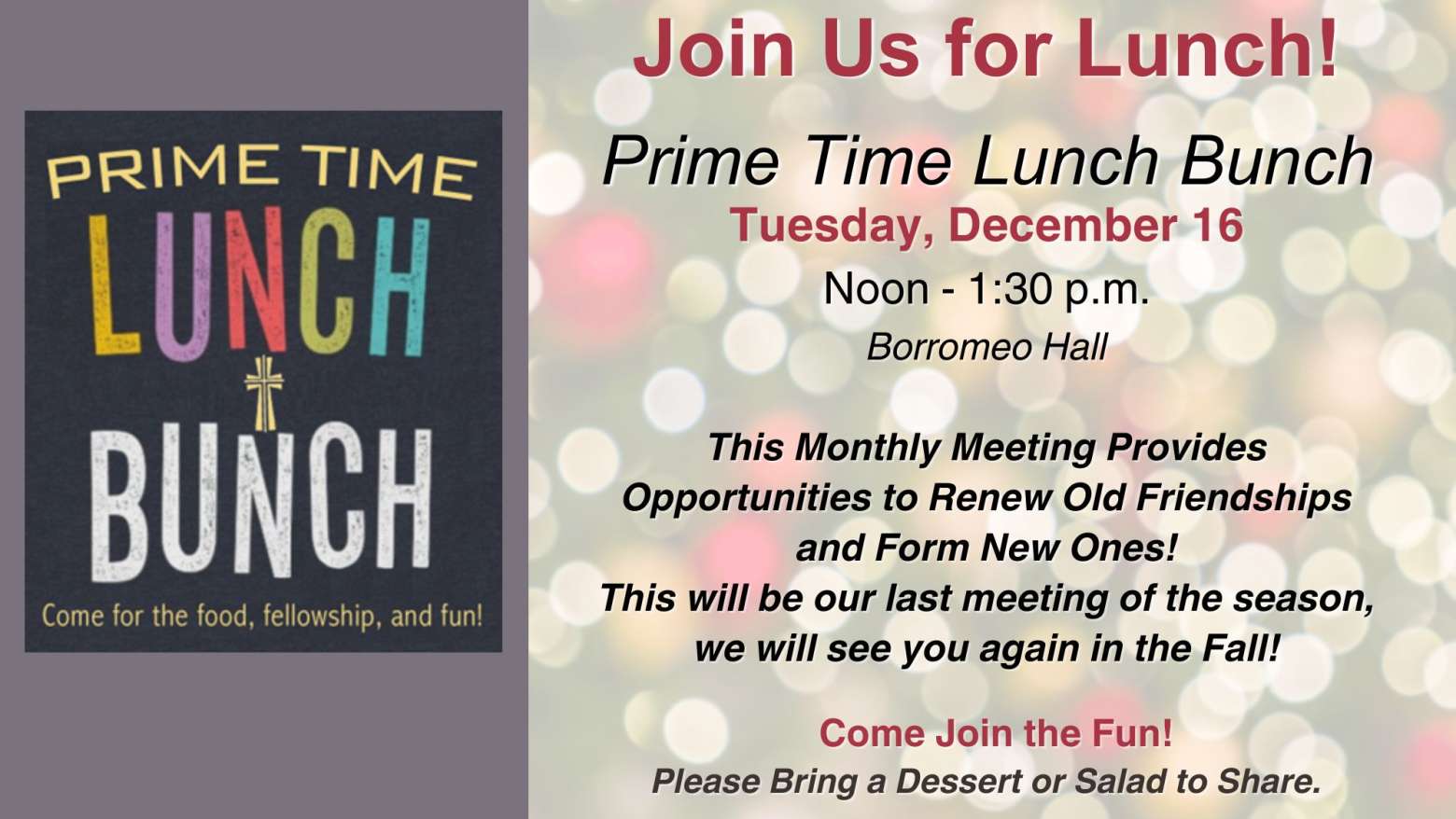
- Prime Time Lunch Bunch 12:00 p.m. (Hall)
- Faith Formation (K-5th Grade) 3:45 p.m. (All Rooms)
- Faith Formation (1st-5th Grade) 6:15 p.m. (All Rooms) - Wednesday, December 17:
- Mass 8:30 a.m. (Chapel/Livestream)
- A&E Change: Christmas Large Trees 9:45 a.m. (Church)
- Faith Formation (K-5th Grade) 4:30 p.m. (All Rooms)
- Children's Choir Rehearsal/Christmas 5:15 p.m. (Church)
- Adult Choir Rehearsal 6:30 p.m. (Church)
- New Testament Study Group 6:30 p.m. (Oscar)
- Middle School Youth Ministry 7:00 p.m. (Hall)
- OCIA Meeting 7:00 p.m. (Pope) - Thursday, December 18:
- Mass 8:30 a.m. (Church)
- Scout Troop Meeting 7:00 p.m. (Hall)

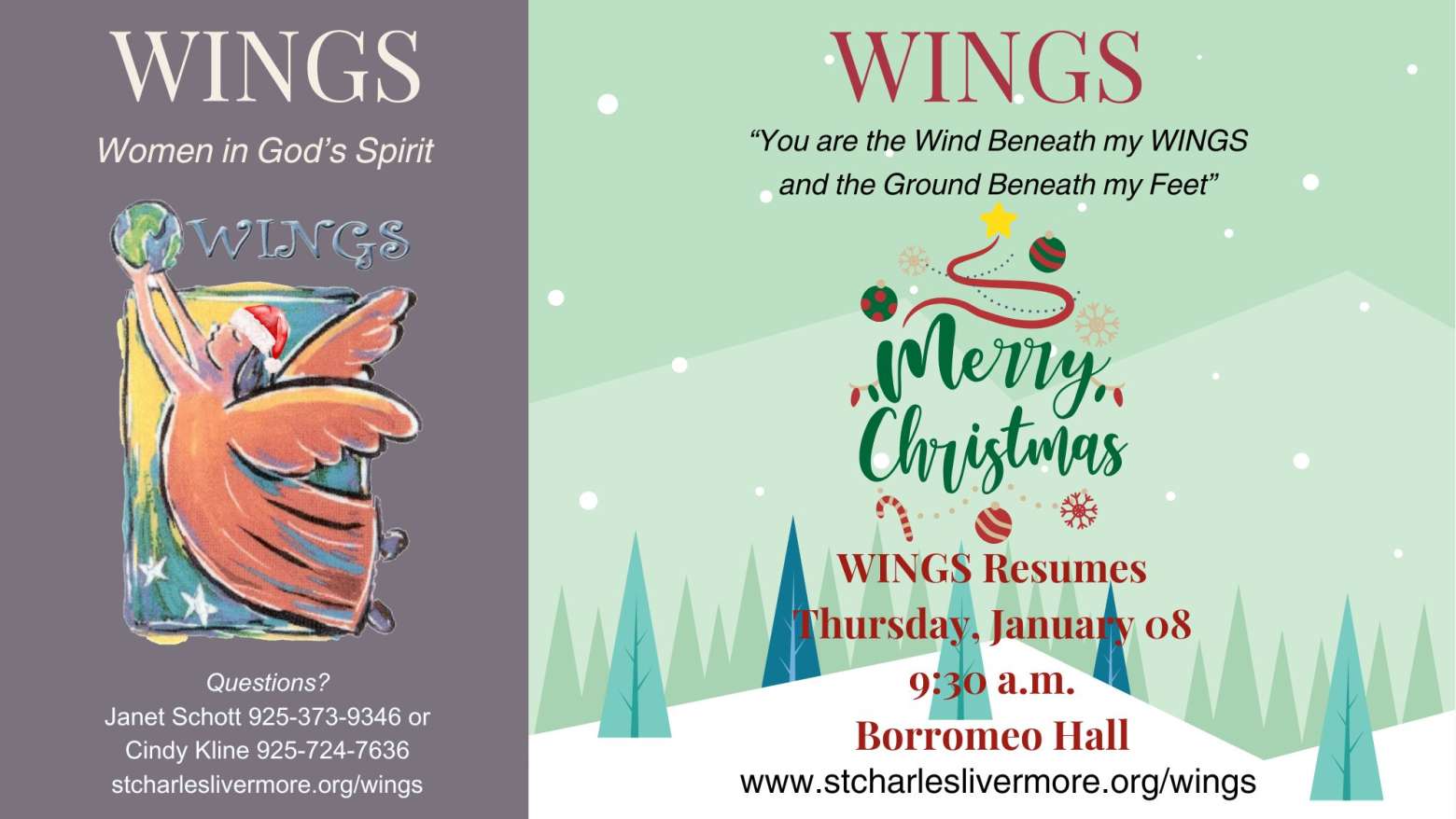
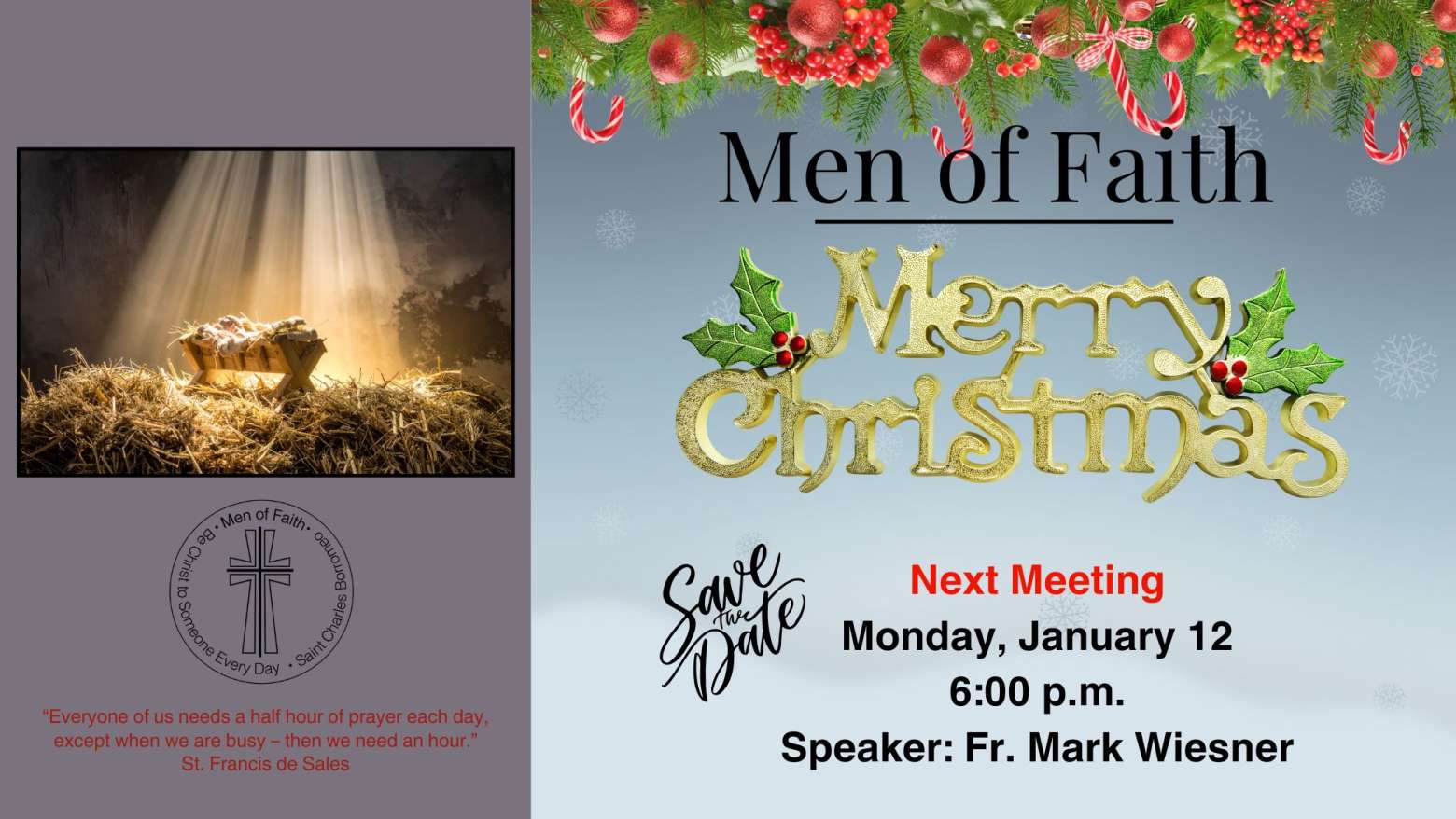

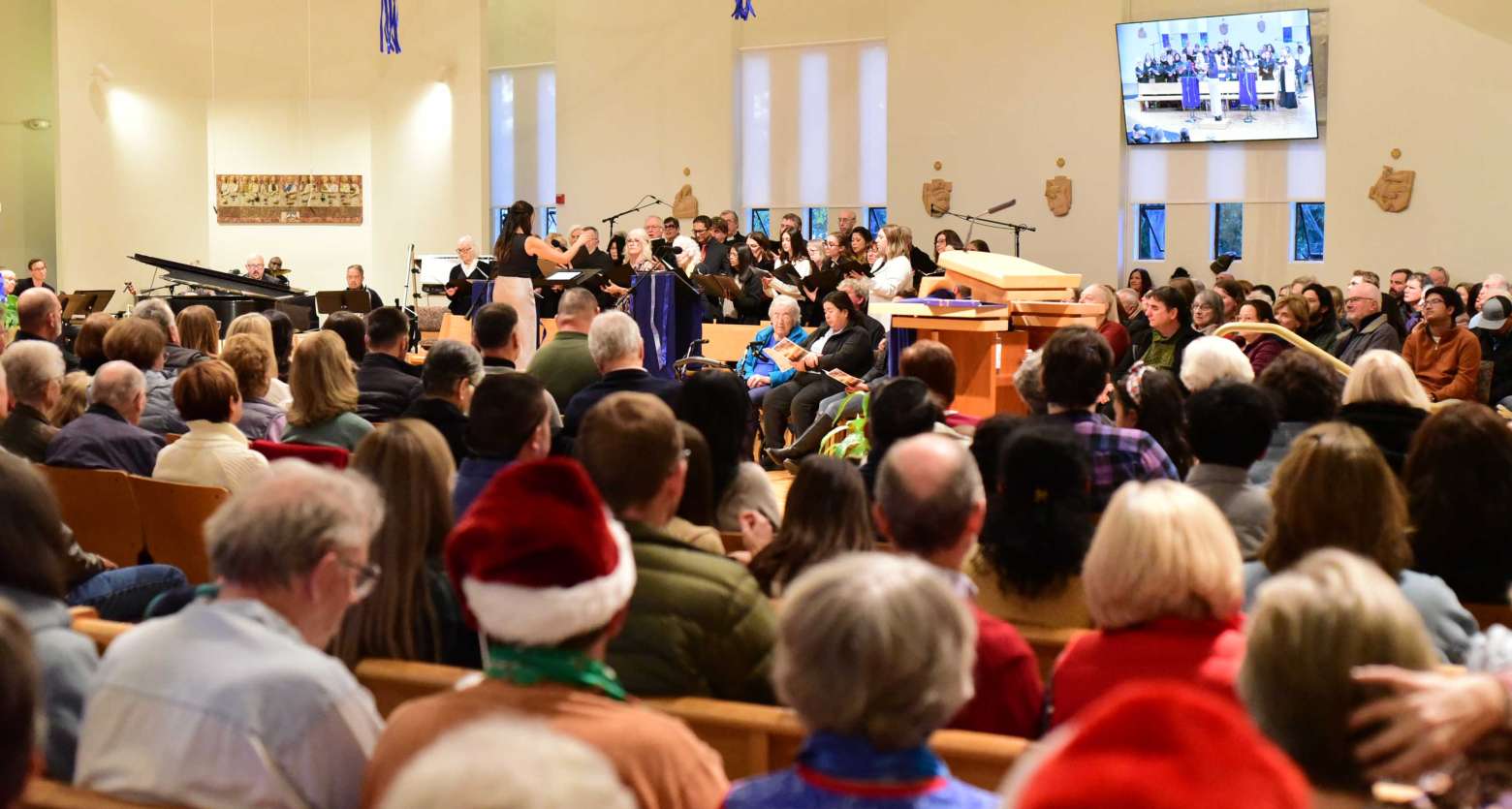
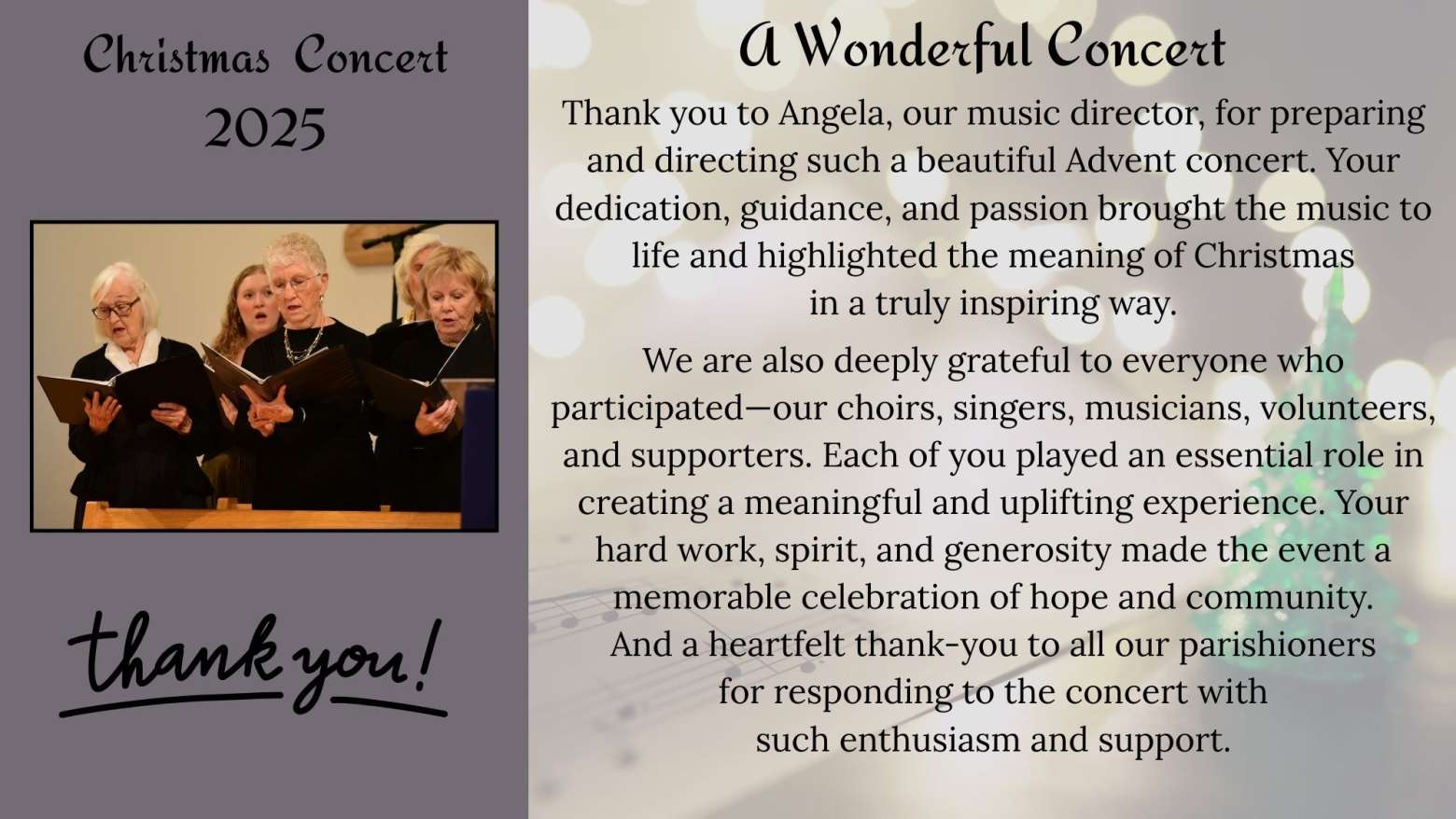
Click HERE for Details
If You Are in Need of Prayer...

St. Charles Borromeo Catholic Community
1315 Lomitas Ave.
Livermore, CA 94550
