A Pilgrimage To The City Of Saint Francis
Our parish is organizing a pilgrimage to the National Shrine of Saint Francis on Thursday, July 16th, 2026, in San Francisco. It is to join the jubilee celebration announced by Pope Leo IX.
The National Shrine of St. Francis of Assisi in San Francisco consists of the Historic church built in 1849 and a beautiful Porziuncola chapel. But most of all, the consecrated Shrine is the “holy ground” where God’s grace extends the blessings of peace, healing, and joy to all who visit.
The Catholic Church is celebrating a year-long Jubilee to mark the 800th anniversary of the death (Transitus) of St. Francis of Assisi. Running until January 10, 2027, the Jubilee invites the faithful to engage in reconciliation and prayer. A Plenary Indulgence is available for pilgrims visiting any Franciscan church worldwide.
The Jubilee Year Highlights:
- Duration: Proclaimed by Pope Leo, this special Year of St. Francis runs from January 10, 2026, through January 10, 2027.
- Plenary Indulgence: The Apostolic Penitentiary grants a Plenary Indulgence to the faithful who fulfill customary conditions (sacramental confession, Holy Communion, and prayer for the Pope's intentions) while praying at a Franciscan church or place dedicated to the saint. Those who are homebound or ill can also receive this indulgence by spiritually joining the celebrations and offering their suffering.
To gain the Jubilee Plenary Indulgence, pilgrims need to:
1. Make a pious pilgrimage by visiting a designated site
2. Receive Holy Communion
3. Go to confession
4. And pray for the intentions of the Holy Father within 8 days of seeking the indulgence.
(You may receive Holy Communion and make your confession during a 'grace period' of 20 days before or after your visit to a pilgrimage church.)
What is a Plenary Indulgence?
- Remission of Temporal Punishment: A plenary indulgence specifically addresses the temporal consequences of sin, which are the punishments that remain after the guilt of the sin has been forgiven through the sacrament of Confession.
- Not a Forgiveness of Sin: It's important to understand that a plenary indulgence does not forgive the sin itself, but rather the temporal punishment that remains as a consequence of that sin.
- Application to the Living and the Dead: A plenary indulgence can be applied to oneself or to souls in purgatory.
I wish to thank Roy Cavellini for coordinating the pilgrimage.
-- Fr. Augustine

- Friday, June 19: Juneteenth
- Mass 8:30 a.m. (Chapel)
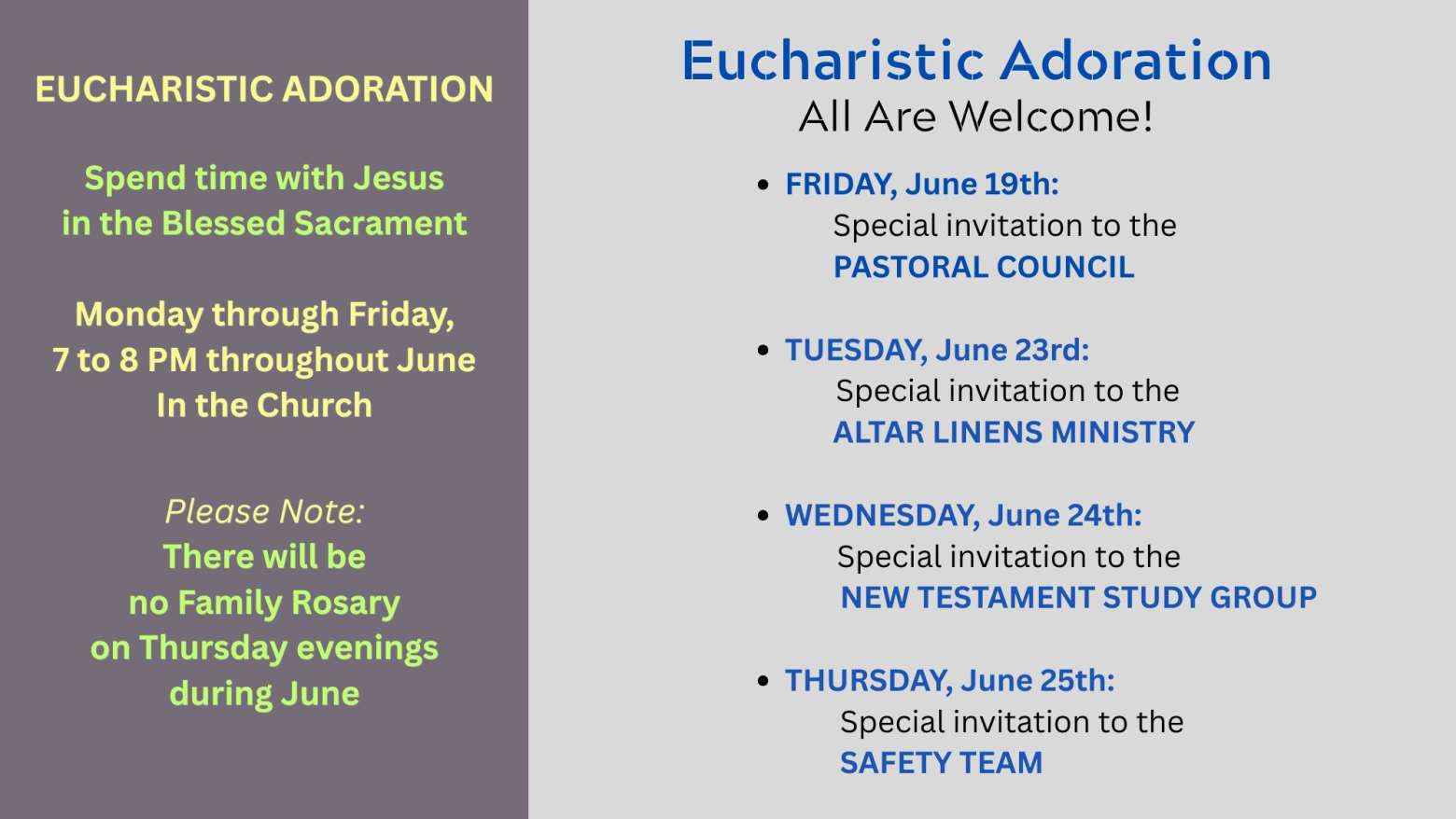
- Eucharistic Adoration Devotion: Special Invitation for Pastoral Council 7:00 p.m. (Church) - Saturday, June 20:
Name Tag Weekend
- Grief Support 10:00 a.m. (Ignatius)
- PC and Finance Council Meeting 10:00 a.m. (Pope)
- Reconciliation 4:00 - 4:30 p.m. (Church)
- Vigil Mass 5:00 p.m. (Church) - Sunday, June 21: Happy Father's Day!
Twelfth Sunday of Ordinary Time
Name Tag Weekend
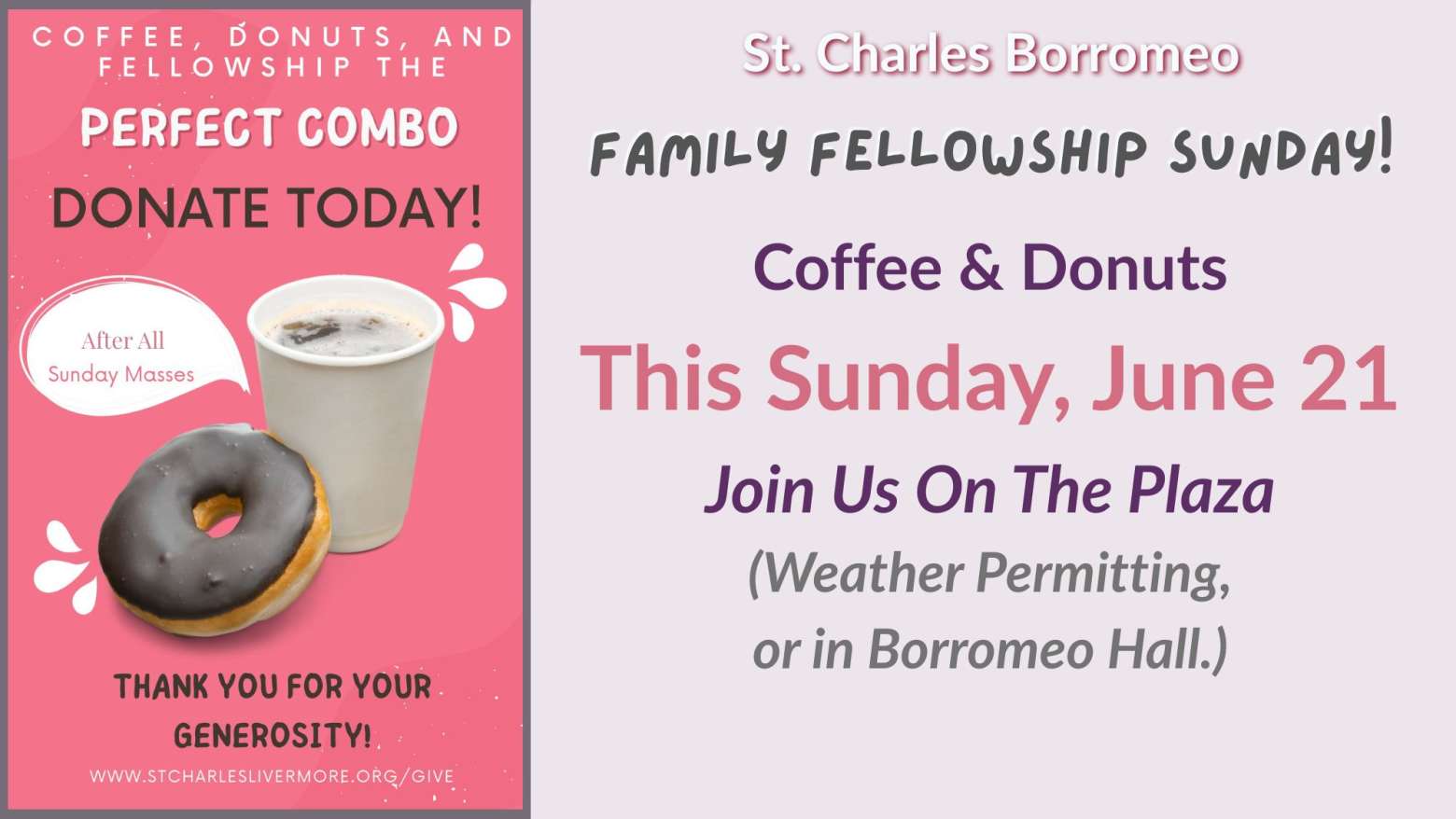
Family Fellowship Sunday (Coffee & Donuts) After All Masses
- Mass 7:30 a.m. (Church)
- Mass 9:30 a.m.(Church/Livestream)
- Mass 11:30 a.m. (Church) - Monday, June 22:
- Mass 8:30 a.m. (Chapel/Livestream)
- Christian Meditation 5:30 p.m. (Offsite)
- Eucharistic Adoration Devotion: 7:00 p.m. (Church) - Tuesday, June 23:
- Mass 8:30 a.m. (Chapel/Livestream)
- Pastoral Staff Meeting 10:30 a.m. (Pope)
- Eucharistic Adoration Devotion: Special Invitation for Altar Linens Ministry 7:00 p.m. (Church) - Wednesday, June 24:
- Mass 8:30 a.m. (Chapel/Livestream)
- Safety Team Meeting 6:00 p.m. (Pope)
- New Testament Bible Study 6:30 p.m. (Church)
- Eucharistic Adoration Devotion: Special Invitation
for New Testament Bible Study7:00 p.m. (Church) - Thursday, June 25:
- Mass 8:30 a.m. (Chapel/Livestream)
- Wedding Rehearsal 6:30 p.m. (Chapel)
- Eucharistic Adoration Devotion: Special Invitation for Safety Team 7:00 p.m. (Church) - Friday, June 26:
- Mass 8:30 a.m. (Chapel/Livestream)
- Fair Friday Small Group 10:00 a.m. (Ignatius)
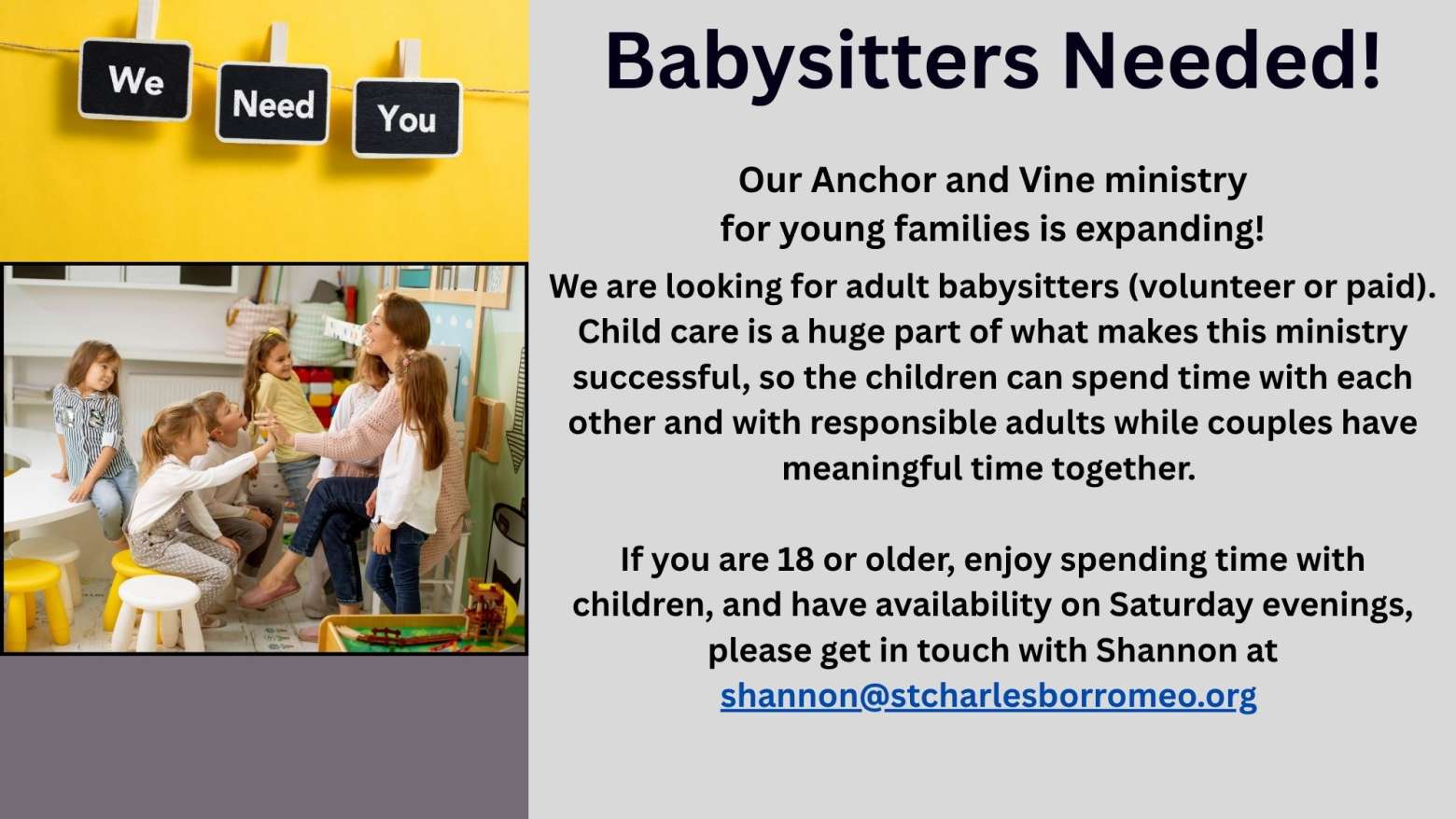
- Eucharistic Adoration Devotion: Special Invitation for Children's Liturgy of the Word Ministry and Anchor & Vine Ministry
You May Also View Our
COMPLETE CALENDAR,
COMPLETE CALENDAR,




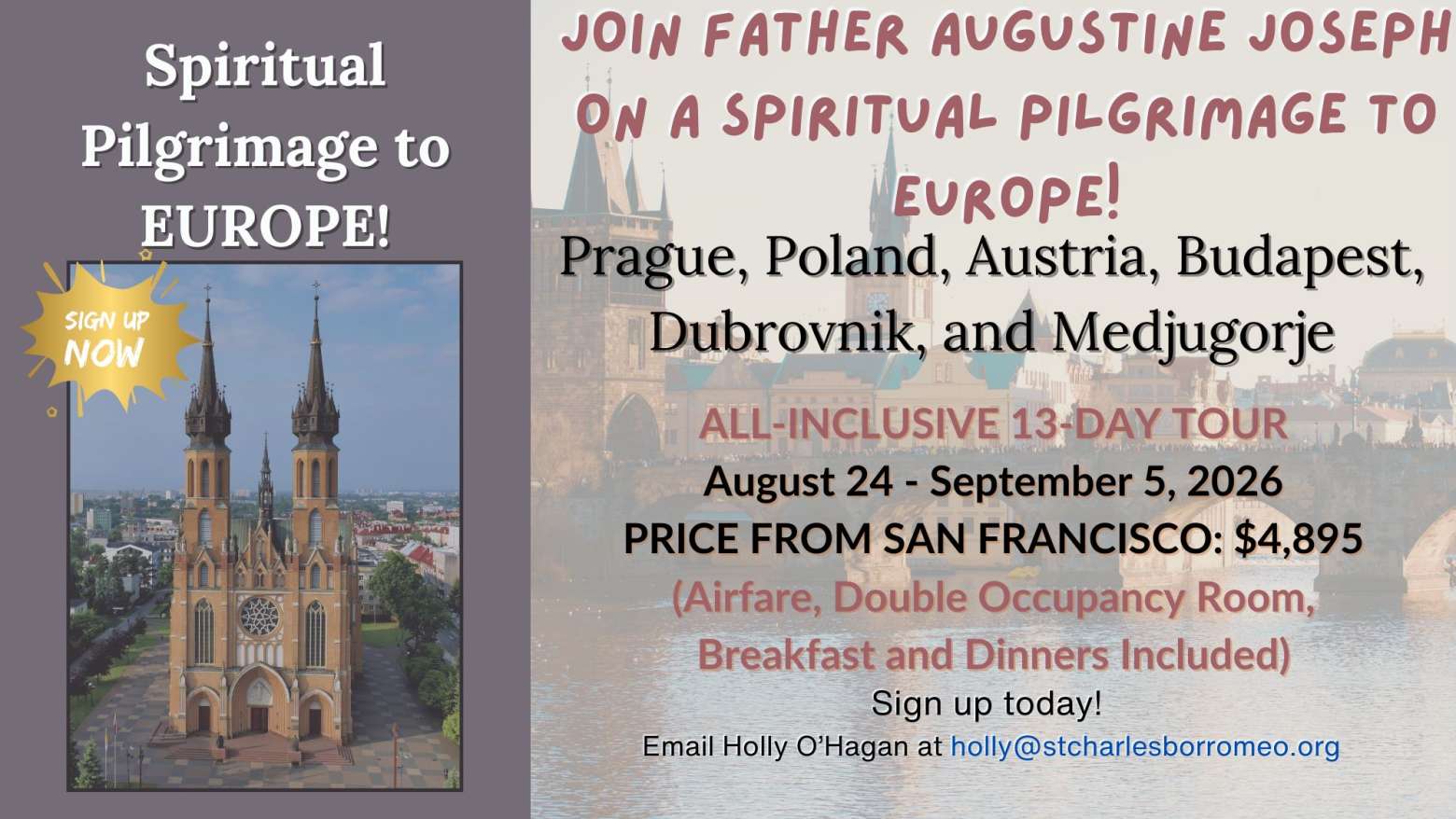
ONLY A FEW SPOTS REMAIN!
DON'T DELAY...SIGN UP TODAY!!
DON'T DELAY...SIGN UP TODAY!!

If You Are in Need of Prayer...

St. Charles Borromeo Catholic Community
1315 Lomitas Ave.
Livermore, CA 94550
