
A CLOSER LOOK AT
MAGNIFICA HUMANITAS
Magnifica Humanitas (“Magnificent Humanity”) is the first encyclical of Pope Leo XIV, issued in 2026. It focuses on safeguarding the dignity of the human person in the age of artificial intelligence and rapid technological change. Inspired by the tradition of Rerum Novarum (Leo XIII, 1891), the document addresses the moral, social, and spiritual challenges posed by new technologies while reaffirming the principles of Catholic Social Teaching.
The encyclical emphasizes that every human person is created in the image and likeness of God and therefore possesses an inherent dignity that cannot be reduced to productivity, efficiency, or data. Pope Leo XIV insists that technology must always serve humanity and never dominate or replace it. AI is not considered evil in itself, but its development and use must be guided by ethical responsibility and the common good (clean air, water, food, and basic necessities of life).
Drawing from the Church’s social doctrine, the Pope highlights key principles such as solidarity, subsidiarity, justice, and care for the vulnerable. He warns against the concentration of technological power in the hands of a few and calls for international cooperation, transparency, and proper regulation to ensure that technological progress benefits everyone.
A major concern of the encyclical is the impact of AI on truth, work, and freedom. Pope Leo cautions against misinformation, digital manipulation, excessive surveillance, and forms of dependency that threaten human freedom. He also stresses the dignity of labor and urges society to protect workers from exploitation and displacement caused by unchecked automation.
The document strongly condemns the use of artificial intelligence in warfare and warns against a “culture of power” that prioritizes domination over peace. Instead, the Pope calls for a “civilization of love,” where technology is used to foster fraternity, peace, and authentic human relationships.
God and the human person are to be the center of all development; all technological development must serve this end. The philosophical speculation glorifying posthumanism (a theory that challenges traditional humanism by questioning humanity’s central, superior place in the universe), which places efficiency and progress over the human person, is detrimental to humanity as a whole and individually.
Ultimately, Magnifica Humanitas invites humanity to embrace technological progress with wisdom and moral responsibility, ensuring that scientific advancement always respects human dignity and leads people closer to truth, justice, and communion with God.
-- Fr. Augustine

- Friday, July 10:
Chapel Closed for Renovation
- Mass 8:30 a.m. (Church) - Saturday, July 11:
Name Tag Weekend
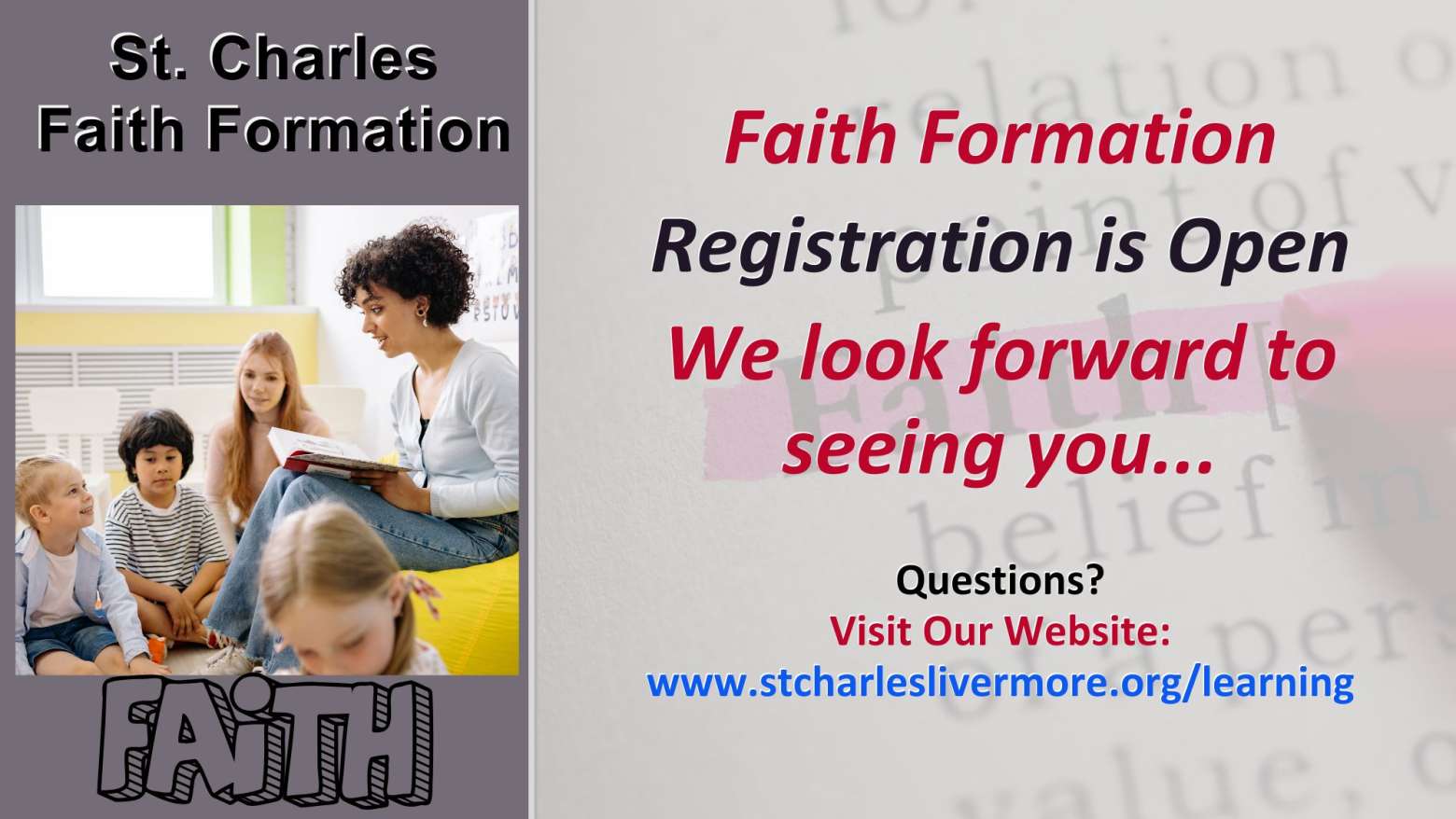
- Faith Formation Family Hike at Sycamore Grove 1:00 p.m.
- Reconciliation 4:00 - 4:30 p.m. (Church)
- Backpack Project Table 4:45 p.m. (Plaza)
- Vigil Mass 5:00 p.m. (Church) - Sunday, July 12:
Fifteenth Sunday of Ordinary Time
Name Tag Weekend
Family Fellowship Sunday (Coffee & Donuts)After ALL Masses
- Mass 7:30 a.m. (Church)
- Mass 9:30 a.m. (Church)
- Mass 11:30 a.m. (Church)
- Baptism Class 1:00 p.m. (Church) - Monday, July 13:
- Mass 8:30 a.m. (Chapel/Livestream)
- Christian Meditation 5:30 p.m. (Ignatius)
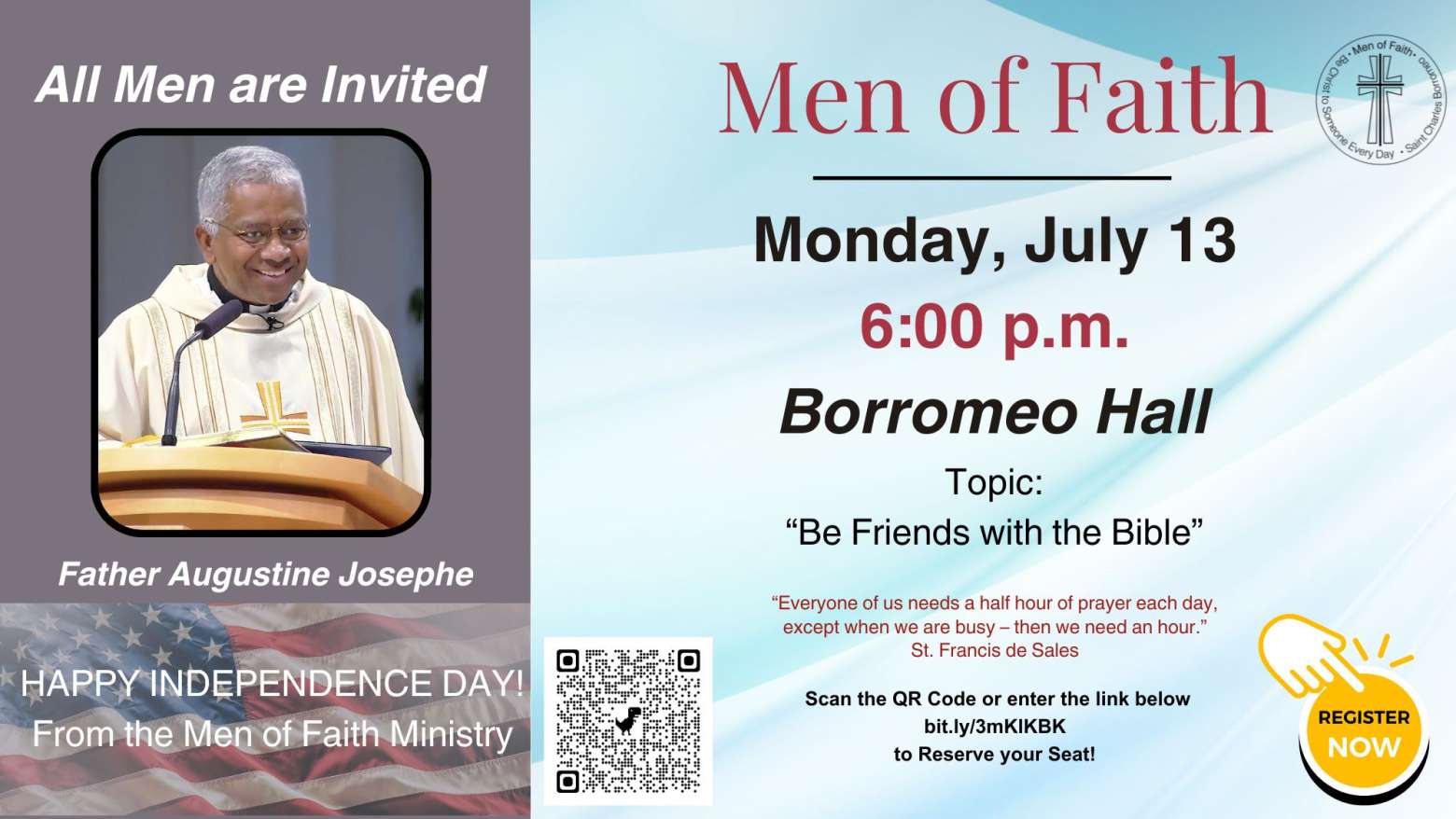
- Men of Faith Dinner Meeting 6:00 p.m. (Hall) - Tuesday, July 14:
- Mass 8:30 a.m. (Chapel/Livestream) - Wednesday, July 15:
- Mass 8:30 a.m. (Chapel/Livestream)
- New Testament Bible Study 6:30 p.m. (Church) - Thursday, July 16:
- Mass 8:30 a.m. (Chapel/Livestream)
- Pilgrimage to the National Shrine of Saint Francis in San Francisco Mass 12:15 p.m.
- Family Rosary 7:00 p.m. (Chapel)
- Scout Troop Meeting 7:00 p.m. (Hall/Pope) - Friday, July 17:
- Mass 8:30 a.m. (Chapel/Livestream)
You May Also View Our
COMPLETE CALENDAR,
COMPLETE CALENDAR,





Sunday, August 2, 2026:

RSVP to Reserve Your Seat HERE!



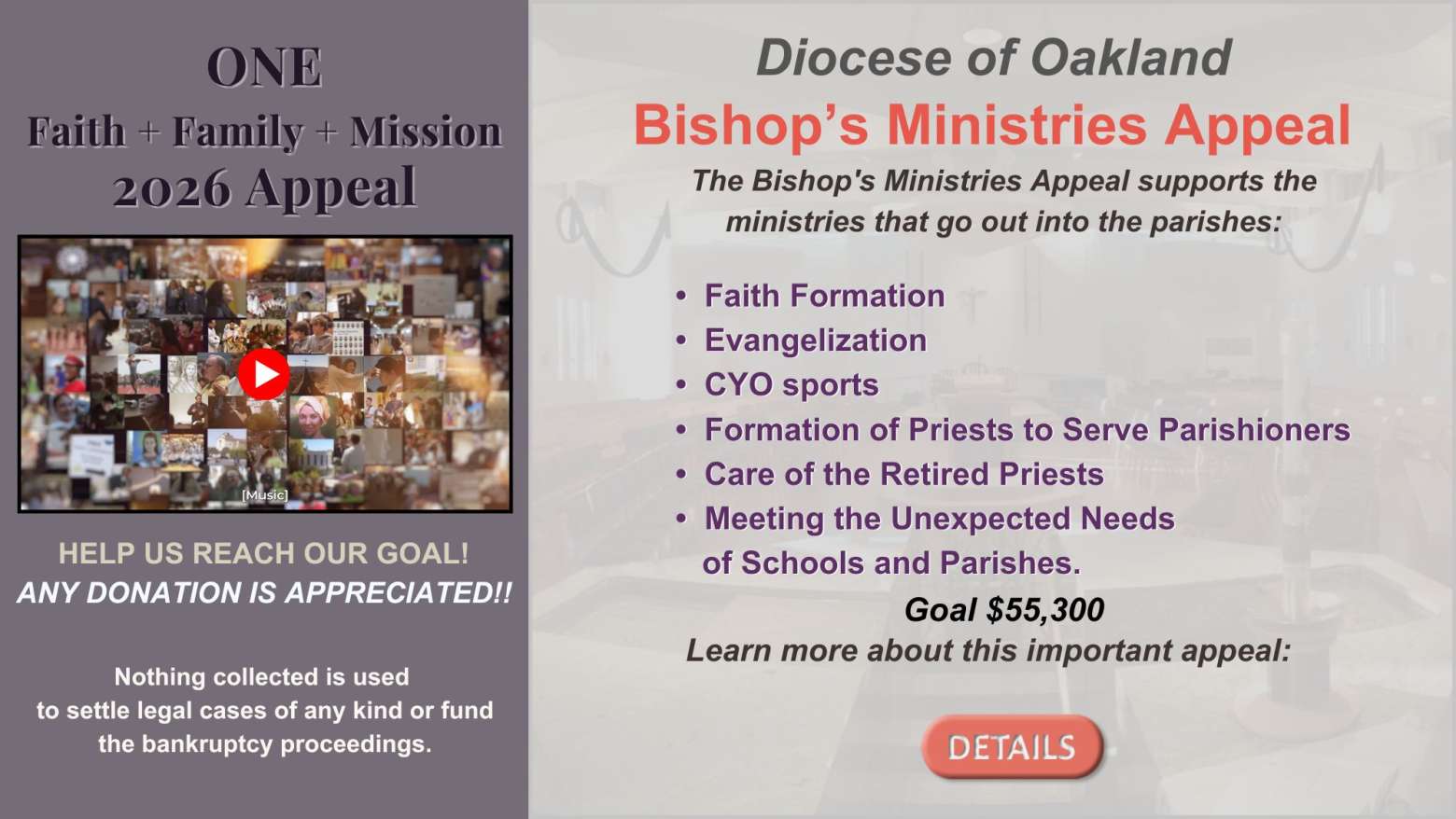
Click HERE to Donate!


If You Are in Need of Prayer...



St. Charles Borromeo Catholic Community
1315 Lomitas Ave.
Livermore, CA 94550
